
No New Haven County Wanted List
Don't bother hunting for a county sheriff wanted list here. Connecticut killed county government long ago. Corrections later folded into one state agency. So there is no county warrant portal, no tip app, and no county jail roster. Any site promising a full county sheriff list is selling you an office that never ran this way. Worse, it may blur together municipal arrests, state custody, parole cases, and stale commercial records.
For photos, the closest official source is the Connecticut State Police Your Help Is Needed page. It spotlights selected open and unsolved cases, sometimes with a photo and a short narrative. The limits matter, though. This is not a roster of every active warrant. There is no county case count, and no update schedule is promised. Images stay with the State Police, and a missing name just means that person is not featured there.
Three New Haven County Fugitive Paths
Wanted searches around New Haven County split into three public paths. Each path has its own job. State Police spotlight selected cases where tips from the public could move an investigation forward. The Connecticut Department of Correction Parole Fugitive Investigations Unit goes after parole absconders and people who slip away from community supervision. Federal fugitive work belongs to the U.S. Marshals Service, which also joins task-force operations. Keep this in mind: none of these replaces a personal warrant check through the court.
| Official path | Who it covers | What it does not cover |
|---|---|---|
| Connecticut State Police | Selected open and unsolved cases chosen for public attention | Every active municipal or court warrant |
| CT DOC parole investigators | Parole absconders and community-supervision escapees | Ordinary arrest warrants or all people sought by police |
| U.S. Marshals Service | Federal fugitives and joint task-force matters | A public county warrant search |
The USMS District of Connecticut page sometimes lists no locally profiled fugitives at all. The work continues regardless. Its Connecticut Violent Crimes Fugitive Task Force keeps running joint investigations. An empty page never proves that no federal case exists.
Want the agency context behind the state side? The official Connecticut State Police services page serves as the reference point.
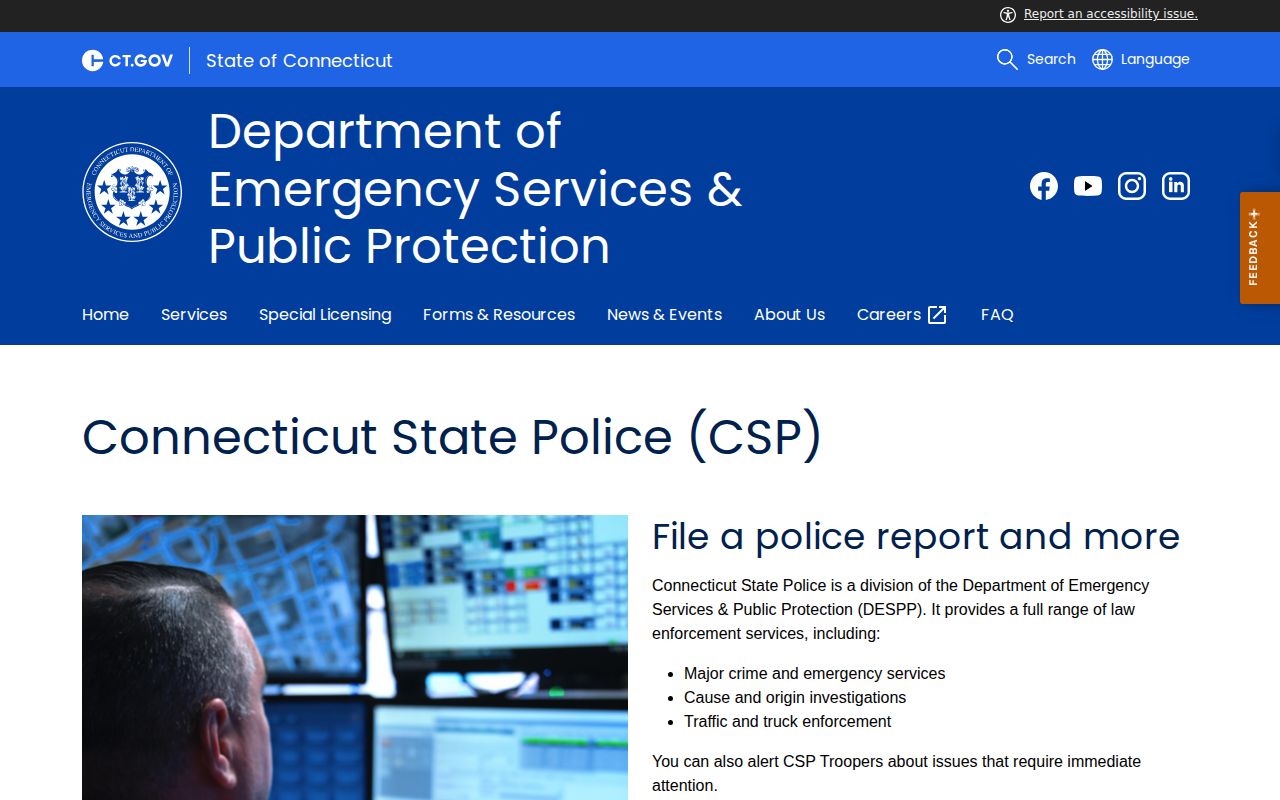
Treat that agency page as a contact hub for State Police. It is not a browseable warrant database for the county. It will not answer a name search on its own.
Note: Municipal police releases and social posts are selective, can vanish without warning, and never show the final court outcome.
What New Haven Wanted Notices Show
A State Police open-case notice is built around one investigation, so its contents shift with the case and with what investigators can release. There is no standardized roster card here. One notice may center on an event. Another may seek a person who might have information. A third might offer only a suspect description. Read the page label and the agency's own wording before deciding what any image actually shows.
| Possible field | What it means |
|---|---|
| Case narrative | The agency's public account of an open or unsolved event |
| Photograph or image | An agency-selected visual tied to that notice |
| Date and location | When and where the described event is said to have occurred |
| Agency contact | The office that can receive information about that case |
| Tip route | A phone or online channel designated for public information |
Never assume a notice carries every field. Height, caution language, charges, or a last known area should be repeated only when the official notice states them plainly. Old news stories also linger online after a warrant changes. Yesterday's article cannot confirm today's status.
Use New Haven Wanted Notices Safely
A wanted notice is a starting point, nothing more. Faces can look alike, and plenty of people in New Haven County share a name. Never try to question, follow, or detain anyone yourself. That job belongs to the police. What you can do is simple. Check which agency posted the notice, match it against what you already know, and send any tip straight through that agency's own channel. Tips sent the right way reach the detectives who can act on them fast.
- Open the State Police help page and confirm that the notice is still live.
- Read the case date, location, narrative, image label, and named agency without adding facts from a commercial page.
- Use at least two details before treating a possible match seriously. Namesakes and old photographs can mislead.
- Send information to the contact on the notice. Call 911 only when there is an immediate danger.
- After a reported arrest, use the New Haven County booking and custody paths to distinguish police processing, DOC intake, and the later court case.
The State Police selected-case page demonstrates the type of official page to inspect.
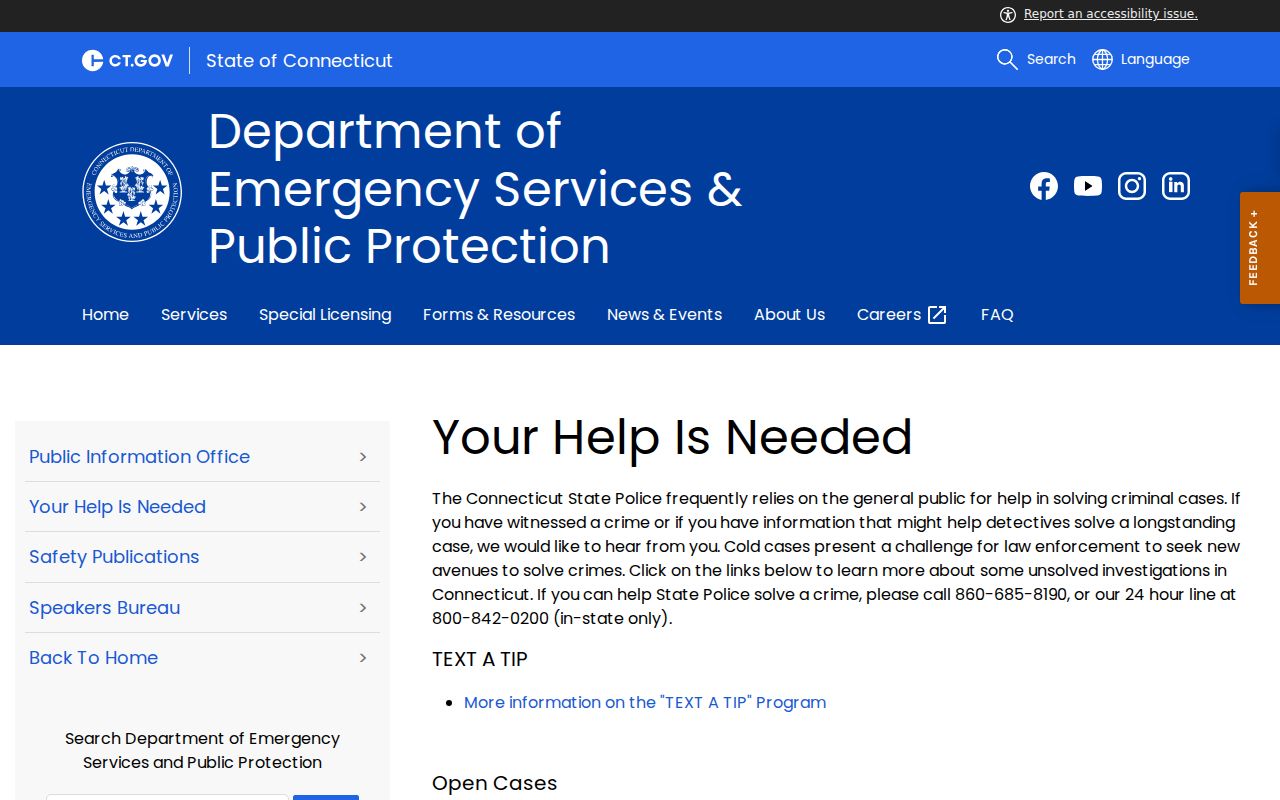
A screenshot preserves the official route while every photo and current case detail stays under agency control. That keeps the record honest and the material where it belongs.
Check New Haven County Warrants
No public countywide portal can clear or confirm every active New Haven County warrant. Go through the Connecticut Judicial Branch instead. Or try the clerk of the geographical-area court tied to the case. If the question concerns your own status, bring in legal counsel first. A municipal police records or nonemergency contact may share what law and policy allow. Still, that is no universal warrant database.
- Start with the Judicial Branch public-record gateway and any known docket or police paperwork.
- Identify the correct geographical-area court. New Haven County has no single county criminal clerk.
- Ask that clerk about the lawful way to confirm the matter. For one's own possible warrant, consult a Connecticut attorney before taking action.
- Treat the separate violation-of-probation arrest-warrant link as a narrow category, not a full active-warrant search.
- Follow court or counsel instructions to arrange a lawful response. Do not use news or social media to decide whether a warrant is active.
| Term | Practical distinction |
|---|---|
| Arrest warrant | A court-authorized basis for arrest in a criminal matter; status needs official confirmation. |
| Violation-of-probation warrant | A warrant tied to an alleged breach of probation; Judicial Branch information covers this category separately. |
| Parole fugitive notice | A DOC supervision matter, not the same as a new municipal arrest warrant. |
| Federal fugitive matter | A federal or joint task-force case handled through federal authorities. |
A pending docket does not prove a warrant is still open. Dockets can show charges and continuance dates long after a court entry. The clerk holds the official file. Never lean on a stale screenshot as warrant clearance.
New Haven Parole Fugitive Tips
The CT DOC Parole Fugitive Investigations Unit works out of Waterbury. It chases parole absconders and community-supervision escapees, and it partners with the USMS and other agencies. That mission is much narrower than a county wanted list. So don't route a parole-fugitive tip as if it were a routine police records question.
CT DOC Parole Fugitive Investigations Unit
2200 Thomaston Avenue
Waterbury, CT 06704
Office: 203-346-7800
Tip line: 203-346-7830
Connecticut State Police Tips
Selected open and unsolved cases
Case line: 860-685-8190
In-state 24-hour line: 800-842-0200
The State Police tip route is the official one. It works online with no name attached. A text-based tip line once ran here, but it is gone now. Rewards are a separate matter. New Haven County has no Crime Stoppers reward policy, so do not count on one unless the live case notice itself announces it. The DOC unit's official page spells out the proper scope and the current contact details.
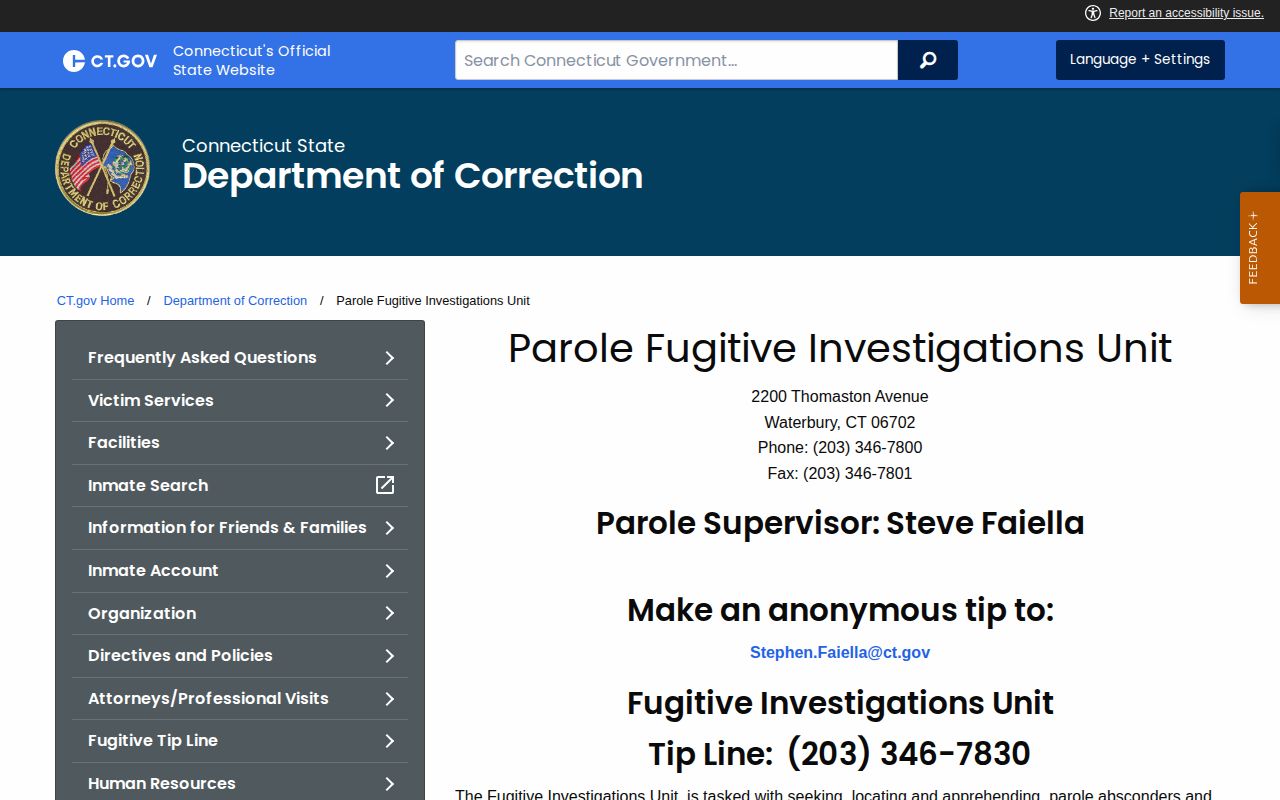
This source separates parole supervision cases from State Police investigations and court warrant questions.
After a New Haven County Arrest
An arrest ends one paper trail and starts another. Booking is usually handled by the arresting department. The person may then move into state custody and appear in Connecticut's inmate lookup as "Accused (Unsentenced)." That label just means the case is still open. Someone released at the station may never enter the DOC system at all.
The docket is the record worth watching once charges are filed. It shows pending counts, continuance dates, and how things end. Cases here sit across several Superior Court locations, so the court named on the police paperwork is a better guide than the county name alone. Online data can run a day behind, and many criminal papers stay with the clerk rather than online. A gap between arrest, booking, and the first docket entry is routine.
Outcomes run the full range. Charges get amended, nolled, dismissed, or acquitted. A nolle means the prosecutor stepped back rather than won. When the online record stops telling the story, disposed Superior Court files can be requested from the Records Center or the Centralized Services Unit. Matching that dated outcome against the older wanted notice keeps the notice from being the last word.
Each state tool has one job. The Judicial Branch information on court records and VINE explains how notification works, and VINE sends free, confidential custody and court-event updates once the right person is identified. It is not a warrant finder or photo list. CT Safe is for suspicious-activity reports. A State Police social post is a selective notice, not a full case history. Keep these tools separate.
Note: A wanted notice can stay indexed after the facts change, so confirm the live agency notice against the current Judicial Branch record.